ChatGPT Ads with Images: What Self-Employed Can Test Now
 Nelija
Contents
ChatGPT Ads are going visual on October 5, 2026: OpenAI is testing image ads alongside image generation, initially in the US. For self-employed people in the DACH region, this isn't an immediately bookable channel, but it's a good moment to prepare three image concepts and check whether your offer actually becomes clearer with an image.
Here's the thing: Many self-employed people see "ChatGPT Ads now with images" and think they need to start immediately. The reality on October 8, 2026 looks different. The test is starting in the US, with a limited group of advertisers, and nobody knows when and under what conditions the format will be available in Germany, Austria, or Switzerland. Source: OpenAI
Still, now is the right moment to do three things: Check whether your offer is even suitable for visual ads. Prepare three image concepts that don't just look nice, but make your offer understandable. And set up a small measurement plan that shows whether an image brings more qualified inquiries than a text-only ad.
This article isn't a news piece about OpenAI. It's a practical test for local providers: three image ideas, a simple offer, clear exclusion criteria, and a measurement plan without a big agency.
What's Changing with ChatGPT Ads in October 2026
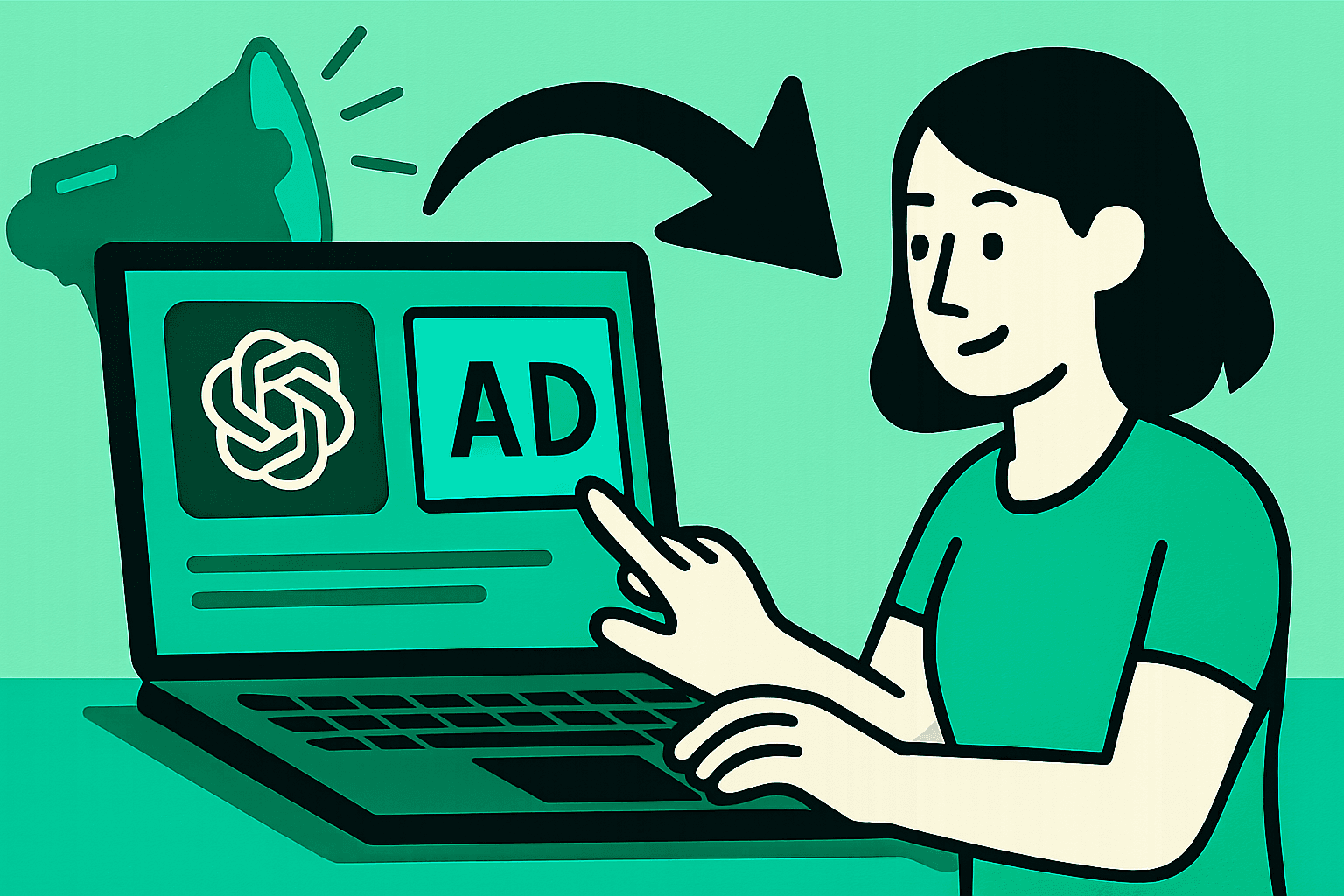
On October 5, 2026, OpenAI announced a new visual ad format for ChatGPT. The ads will work with images and show products, their use, or associated experiences. Source: OpenAI
The first deployment is planned during image generation in ChatGPT. The ad should appear next to or in the context of the generation process, not as part of the user-requested image. It will be clearly marked as advertising and separated from the generated image. Source: TechCrunch
According to OpenAI, ads should not influence ChatGPT's responses. This is a platform commitment, not an independent effectiveness study. Source: OpenAI
The new test is starting initially in the US and with an initial group of advertisers. Source: The Verge According to available reports, users of ChatGPT Plus, Pro, and Enterprise won't be targeted with these ads; the new visual test is initially aimed at users of free or ad-supported tiers.
Previous ChatGPT advertising was already tested in the US on February 9, 2026, according to OpenAI. This is distinct from the new visual format. Source: OpenAI Help Center
The OpenAI announcement also mentions expanded measurement capabilities and integrations with measurement or data partners, including Hightouch, Tealium, and LiveRamp. However, this doesn't mean these integrations are already available for small DACH businesses. Source: Yahoo Finance
According to reports, OpenAI is working on brand suitability evaluations with DoubleVerify and Integral Ad Science. This indicates a planned control and measurement framework, but isn't proof that all features are already publicly bookable. Source: Unite.AI
What This Means for Self-Employed People in the DACH Region
The available information doesn't confirm a launch of ChatGPT image ads in Germany, Austria, or Switzerland. Claims about DACH bookability, specific CPM/CPC prices, minimum budgets, or a public self-service ad manager would currently be unverified.
This means: You can't simply open an Ads Manager on October 8, 2026 and get started. But you can use the time to develop three image concepts, sharpen your offer, and set up a measurement plan. When the format becomes available, you'll be prepared.
Which Offers Make Sense for Visual Ads
Not every offer becomes clearer with an image. An image should answer at least one of these questions: What's being offered? Who is it for? What does the application look like? What concrete result can be expected? What should the person do next?
Particularly Suitable
Offers whose benefits can be shown quickly:
- Hair salons and beauty studios
- Interior design, kitchens, renovation, and landscaping
- Holiday rentals, hotels, and local restaurants
- Photography, wedding services, and event offerings
- Fitness, yoga, and wellness offerings
- Tutoring or coaching with visible results
- Local products like custom furniture, flowers, baked goods, or handcrafted items
Less Suitable
Services whose quality is only recognizable after longer examination or consultation:
- Complex tax, legal, or business consulting
- Highly explanation-intensive B2B services
- Offers with unclear target audience
- Services without meaningful before-after, application, or result situations
- Services where an image easily creates false expectations
Proximity Is a Selling Point
For local providers, proximity is an important part of the visual:
- Recognizable location or regional context
- Real employees or credible customer situation
- Clear service description
- Visible availability or appointment option
- No generic stock photo aesthetic without connection to the business
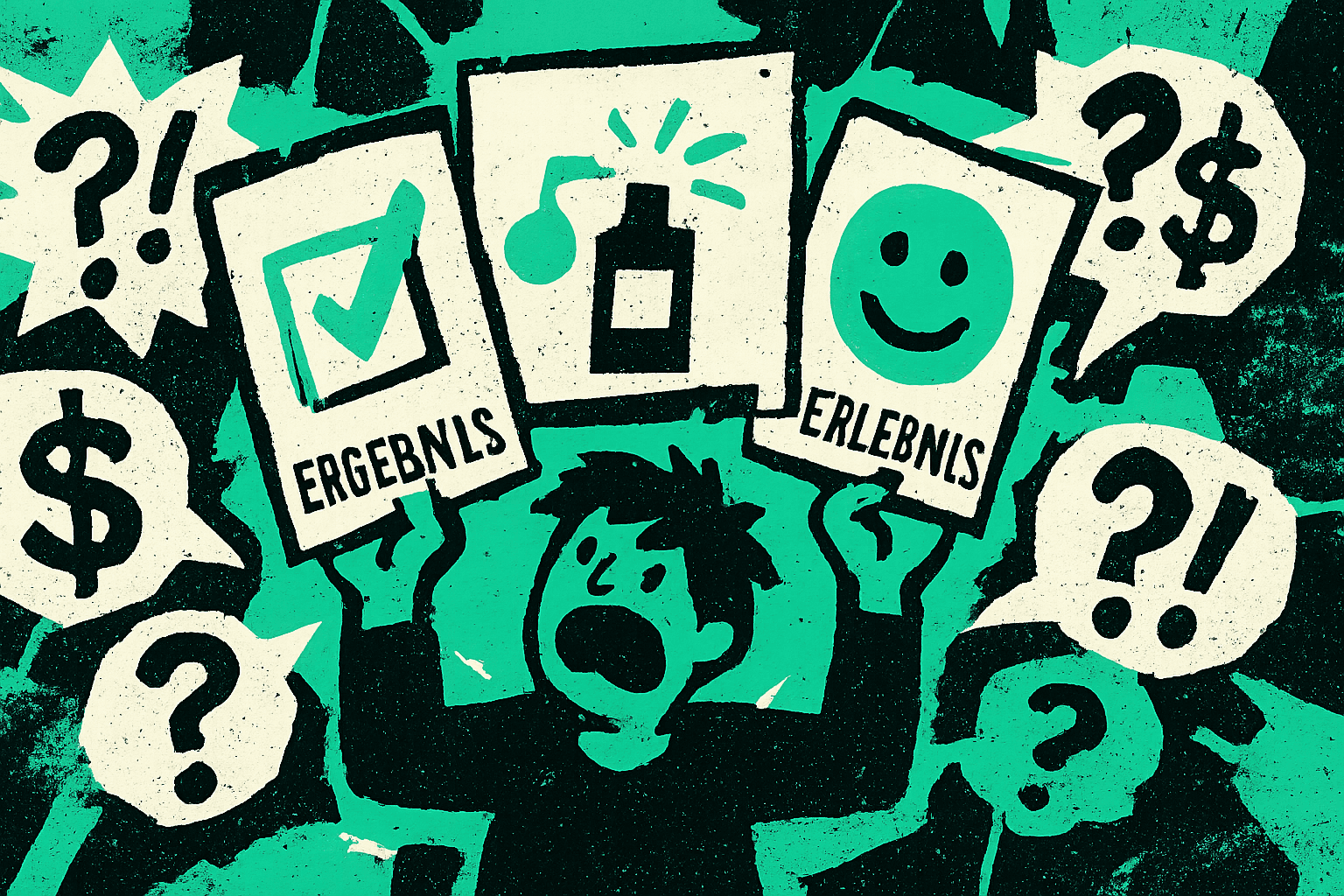
Three Image Concepts for Local Service Providers
These three concepts cover most local offerings. You don't need all three at once. Choose the one that makes your offer understandable fastest.
1. Result Image: "This Is What It Looks Like Afterwards"
Example: renovated bathroom, maintained garden, finished hairstyle, or designed wedding table. Image idea: a credible result with short caption like "Free initial consultation in [location]". Suitable for services with visible end state.
Important: Only use before-after representations with genuine consent and without misleading editing. An AI-generated bathroom isn't a real result of your work.
2. Application Scene: "This Is How It Works"
Example: professional during consultation, physiotherapist during an exercise, craftsperson during installation. Image idea: a real situation that reduces uncertainty and makes the process understandable. Suitable for services where trust and process understanding are crucial.
No exaggerated promises like "guaranteed pain-free" or "immediate results" if this isn't demonstrable.
3. Local Experience: "This Is What You Get On-Site"
Example: breakfast in a café, yoga class in the studio, consultation in the shop, or excursion with local provider. Image idea: the concrete usage situation with regional reference. Suitable for gastronomy, leisure, wellness, tourism, and personal services.
The location reference should be clear in the visual or accompanying message. A generic café image from a stock database doesn't help anyone.
How to Formulate Your Offer and Call-to-Action
For an initial test, the offer should be simple, concrete, and limited:
- "Free 15-minute initial consultation in [location]"
- "First appointment including brief analysis"
- "Trial session for new customers"
- "Non-binding quote within 24 hours"
- "10 available consultation appointments in October"
A Good Structure
A good structure is:
- Service: What are you offering?
- Target audience: For whom?
- Location: Where?
- Benefit: Why is it relevant?
- Action: What should happen now?
Example: "Kitchen planning in Cologne: We'll develop a realistic solution for your space in a free initial consultation. Request appointment now."
Good Calls-to-Action
- "Request appointment"
- "Check availability"
- "Get free consultation"
- "View examples"
- "Open route to studio"
Weak Calls-to-Action
- "Learn more" when it's unclear about what
- "Buy now" for an explanation-intensive local service
- Multiple competing actions in the same ad
- Artificial urgency without real scarcity
For local tests, the landing page should repeat the same message as the ad. If the image promises "free initial consultation", this offer must be immediately visible on the landing page. More in our article Defining Conversions.
Which Metrics to Check at the Start
The first question isn't "How many clicks?", but "Is the ad even being shown in relevant volume?" With a limited US test, available reach may be severely restricted.
Delivery or Reach
Check whether OpenAI provides impressions, clicks, or comparable metrics for the respective test. Specific standard definitions for the new visual format haven't been published yet.
Click-Through Rate
Click-through rate (CTR) is calculated as:
CTR = (Clicks ÷ Impressions) × 100
The number only makes sense if OpenAI reports impressions and clicks according to a consistent definition.
Landing Page Rate
Proportion of clicks that actually reach a fully loaded landing page. This can additionally be monitored with web analytics and UTM parameters. More in our article Measuring ChatGPT Ads.
Inquiries
Number of forms, calls, bookings, or WhatsApp contacts.
Cost Per Inquiry
Cost per inquiry = Advertising costs ÷ qualified inquiries
Qualified Inquiries
Not every contact is a success. Define in advance:
- Appropriate location
- Appropriate budget
- Appropriate need
- Realistic purchase intent
- Achievable appointment
Appointment and Closing Rate
For local providers, a booked appointment is more important than a mere click.
Offline Attribution
Ask prospects in the form or at first contact: "How did you hear about us?" Additionally, use a dedicated phone number or landing page only for the test. More in our article Understanding Campaign Analysis.
With currently available information, there's no verified price benchmark for ChatGPT Ads in the DACH region. An article therefore shouldn't cite invented CPM, CPC, or minimum budget values.
Costs and Budgets for Small Businesses in the DACH Region
For the new visual format as of October 8, 2026, no verified public DACH prices, minimum budgets, or billing models are evident from available OpenAI information.
A realistic approach is therefore: first calculate creative and measurement costs, don't claim media costs as long as no DACH access exists, only release budget when target audience, billing, area selection, and conversion measurement are documented.
Internal Preparation Test Without Platform Budget
- Create three visuals
- One version each for result, application, and experience
- Set up a dedicated landing page or unique UTM link for each
- Survey five to ten test people from the target audience
- Check which visual makes the offer and next step understandable fastest
Once DACH booking becomes possible, a small business should initially work with a strictly limited test budget and define a maximum acceptable price per qualified inquiry in advance. A specific euro amount would be an editorial recommendation without published platform prices, not a verified fact.
Brand Suitability and Limits of the New Ads
Brand suitability means an ad ideally doesn't appear next to content that doesn't fit the brand. According to reports, OpenAI is working on corresponding evaluations with DoubleVerify and Integral Ad Science. Source: Unite.AI
Open Questions for Self-Employed People
Several questions remain open for self-employed people:
- Which categories can be excluded?
- How granular can context be controlled?
- Which local areas are supported?
- What audience and location data are available?
- What reports are available for individual campaigns?
- How are image and brand guidelines reviewed?
The first test phase is US-limited. A DACH business therefore can't automatically assume a German visual will be delivered in Germany. Source: OpenAI
The Fit Problem
The ad format appears in the context of image generation. This creates a possible fit problem: A user might be creating an image for private, creative, or completely different purposes and not be in a concrete purchase intent.
Visual ads can be misunderstood due to their proximity to AI-generated images. Clear labeling as advertising and separation from the generated image are therefore particularly important to highlight editorially. Source: OpenAI
What You Shouldn't Use
Providers shouldn't use visuals that:
- Show third-party brands without permission
- Suggest unrealistic results
- Depict people without consent
- Promise medical, financial, or legal guarantees
- Present artificial before-after results as real cases
- Pass off AI-generated people as real customers
More on legal basics in our article Creating Ad Creatives.
Common Mistakes
I know this: You see an announcement, want to be first, and make exactly the mistakes I've seen in recent years with Meta Ads, Google Ads, and now also with ChatGPT Ads.
Claiming Availability Too Early
The publicly described test is initially US-limited. You can't simply open an Ads Manager on October 8, 2026 and get started.
Citing Unverified Prices
No verified costs for the new format in DACH are documented. Anyone promising you a CPM or CPC today is inventing it.
Using a Beautiful but Empty Image
The visual shows mood but neither offer nor benefit. A beautiful image isn't a selling point.
Combining Too Many Messages
Price, discount, service scope, location, and multiple CTAs overload the format. Choose one message.
Not Establishing Local Connection
A generic studio or craftsperson image doesn't show where the service is offered. Proximity is a selling point.
Confusing AI Image with Real Service
An artificially generated result can create expectations the business can't fulfill. Use real photos for real results.
Not Setting Up Own Conversion Measurement
Without UTM parameters, separate landing page, call tracking, or follow-up question, the contribution can't be reliably evaluated. More in our article Measuring ChatGPT Ads.
Confusing Clicks with Business Success
For local providers, qualified inquiries, appointments, and revenue count. Not clicks.
Too Short Test Duration with Too Little Data
A single day or few contacts aren't enough for reliable conclusions. Plan at least seven days.
Changing Different Offers Simultaneously
When visual, offer, landing page, and target audience all change at once, no learning effect is visible. Change only one variable.
A Small Test Plan for the First Seven Days
This test plan works even without platform access. You can implement steps 1 to 4 immediately and be prepared when the format becomes available.
Day 1 – Set Goal
- Select a single offer
- Define one region
- Set maximum acceptable cost per qualified inquiry
- Determine one primary conversion, e.g., appointment booking
More in our article Defining Conversions.
Day 2 – Prepare Three Visuals
- Result image
- Application scene
- Local experience
- Same brand colors, same core message, and same CTA
More in our article Creating Ad Creatives.
Day 3 – Set Up Landing Page and Measurement
- Dedicated landing page or clearly marked campaign URL
- UTM parameters
- Form with source question
- Call or appointment tracking
- Review privacy and consent texts
More in our article Creating Website with AI.
Day 4 – Test Comprehensibility
- Briefly show the visual to five to ten people from target audience
- Ask each: "What's being offered?", "Who is it for?", "What should you do?"
- Only continue using visuals understood without additional explanation
Day 5 – Check Platform Access and Requirements
- Check availability for DACH
- Review approved ad formats and image sizes
- Document billing and targeting options
- Don't present US results as German market values
More in our article ChatGPT Ads Manager.
Day 6 – Record First Data Status
- Delivery
- Clicks or interactions
- Landing page visits
- Inquiries
- Qualified inquiries
- Technical errors and feedback
Day 7 – Change Only One Variable
- Either visual
- Or CTA
- Or offer
- Not everything simultaneously
- Make decision based on cost per qualified inquiry, not exclusively on click-through rate
More in our article Optimizing Campaigns.
Frequently Asked Questions
Can I book ChatGPT Ads with images in Germany on October 8, 2026?
Not generally, according to available information. The announced test is starting initially in the US with a limited group of advertisers. Source: OpenAI
Where do the new ChatGPT image ads appear?
Initially in the context of image generation in ChatGPT. They should be separated from the generated image and marked as advertising. Source: OpenAI
Does an ad influence ChatGPT's response?
OpenAI states that advertising doesn't influence responses. This is a statement from the platform operator, not an independent effectiveness study. Source: OpenAI
How much does a ChatGPT image ad cost in Germany?
For the new format, no verified public DACH prices or minimum budgets are available as of the stated date. Wait for official information before setting a budget.
Which local offerings are suitable for visual ads?
Especially offers with visible results, understandable application situations, or strong experiential connection, such as renovation, beauty, gastronomy, wellness, or photography. More in our article ChatGPT Ads for Local Providers.
Should I use real photos or AI-generated images?
For trust and local credibility, real, lawfully used photos are usually the safer foundation. AI images can be used for concepts or mood representations, but must not misleadingly fake real results or customer situations. More in our article AI Images for Your Marketing.
Which metric is most important for my first test?
Cost per qualified inquiry or per booked appointment is usually more meaningful for local services than pure impressions or clicks. Specific measurability depends on available OpenAI reports and your own web analytics. More in our article Understanding Campaign Analysis.
How long should I test?
A seven-day organizational test can show whether tracking, message, and process work. However, for reliable performance values, duration must be adapted to reach, conversion volume, and delivery; no fixed universally applicable minimum duration has been published for this new format.
The Step You've Been Postponing for Years
You know you can't postpone your marketing any longer. Offline is working. Online, hardly anyone sees you. And now a new ad format is coming that might be available in a few months, and you're wondering: "Should I wait now or prepare now?"
The answer is: Prepare now. Not because ChatGPT Ads with images will be available tomorrow. But because preparation shows whether your offer actually becomes clearer with an image. Whether you have a landing page that delivers on the ad's promise. Whether you can measure what an inquiry costs.
The concrete first step for today: Choose one offer. Take three photos: result, application, experience. Show them to five people from your target audience and ask: "What's being offered? Who is it for? What should you do?" If the answer doesn't come within ten seconds, the visual isn't good enough.
You don't have to be able to do everything. You just have to start. More in our topic guide ChatGPT Ads and Advertising in AI Assistants.
Anyone who doesn't want to do it alone or wants to be faster can start with Nelija for free: Try Nelija free. No pressure. No subscription. Just a tool that helps you finally take the step.
Comments
Comments are only available when you are signed in. You are self-employed and want access to Nelija.com, including a free website? Message Nelija directly.